 11
11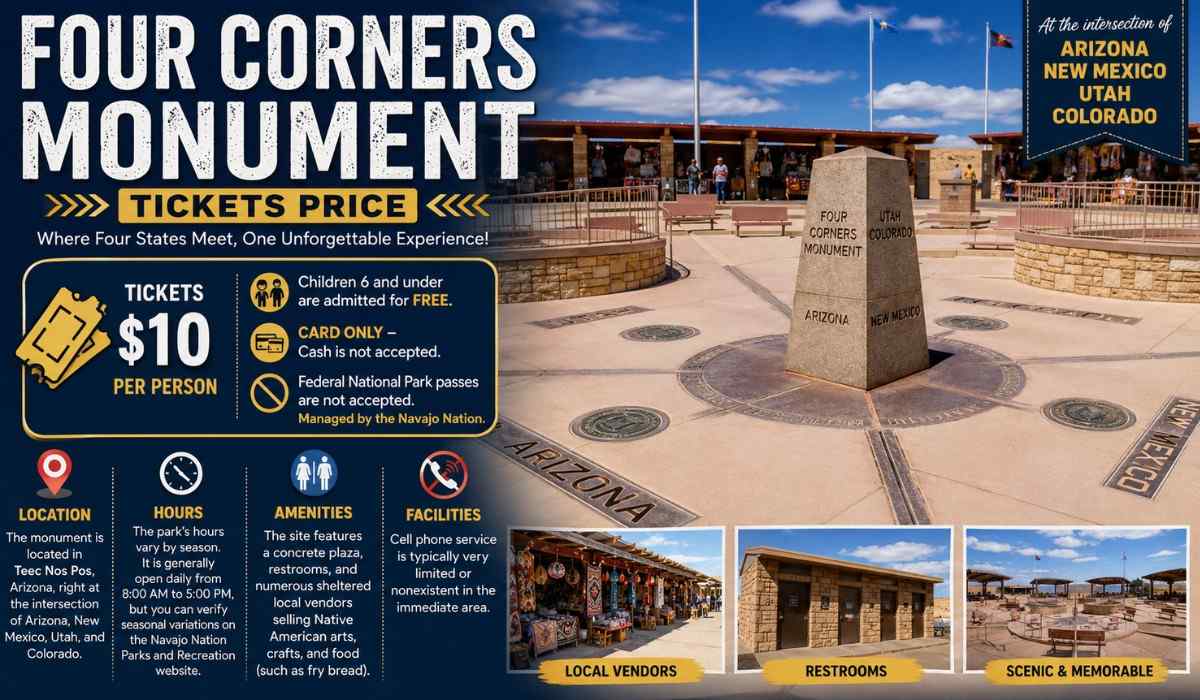
The Four Corners Monument is one of the most unique landmarks in the United States, attracting thousands of visitors every year. It is the only place in the country where the borders of Arizona, Utah, Colorado, and New Mexico meet at a single point. Tourists come here to stand in four states at once, take memorable photographs, shop for authentic Native American crafts, and experience the rich culture of the Navajo Nation. Before planning your visit, it’s important to know the Four Corners Monument tickets price, opening hours, payment methods, facilities, and travel tips to make your trip smooth and enjoyable.
If you’re planning a visit, knowing the Four Corners Monument tickets price in advance can help you prepare for your trip. Unlike many federal attractions in the United States, the monument is managed by the Navajo Nation, so its admission policies are different from those of the National Park Service.
As of 2026, the entry fee is $10 per person, while children aged 6 years and under can enter free of charge. Tickets are purchased directly at the entrance when you arrive. Visitors should note that only credit and debit cards are accepted, as cash payments are not accepted at the monument. In addition, America the Beautiful Pass and other National Park annual passes are not valid because the monument is located on Navajo Nation land rather than within the U.S. National Park System.
| Visitor | Ticket Price |
| Adults | $10 per person |
| Children (6 years & under) | Free |
| Payment Method | Credit/Debit Cards Only |
| Cash Accepted | No |
| National Park Pass Valid | No |
Read Also: Science City Jalandhar Ticket Price
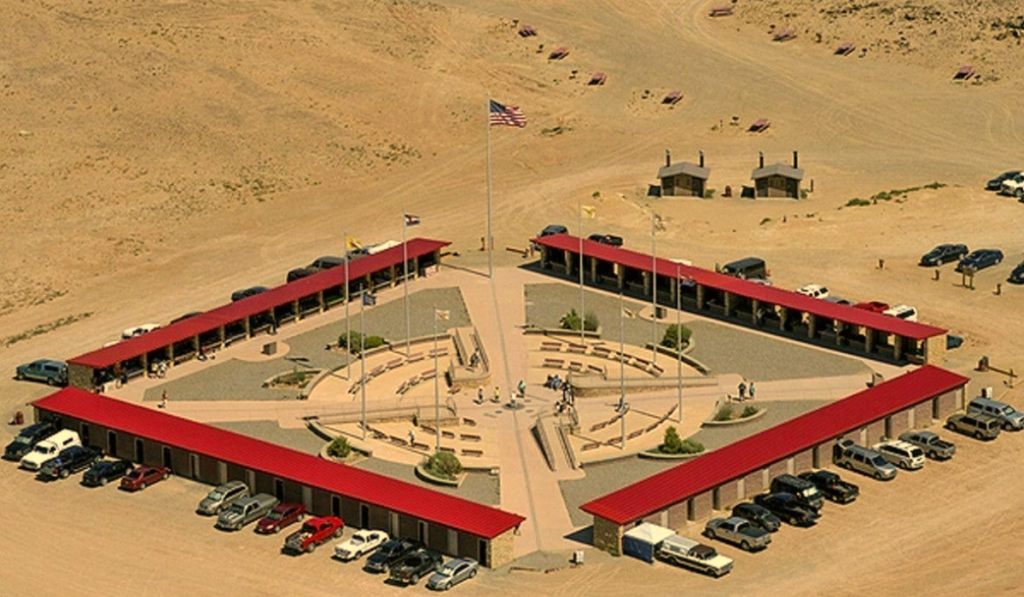
The Four Corners Monument is one of America’s most distinctive geographical landmarks. It marks the exact point where Arizona, Colorado, New Mexico, and Utah meet, allowing visitors to stand in all four states simultaneously. This makes it a popular destination for road trips, photography enthusiasts, geography lovers, and families exploring the American Southwest.
Unlike many landmarks managed by federal agencies, the monument is owned and operated by the Navajo Nation. At the center of the attraction is a beautifully designed sunken concrete plaza, where the famous bronze marker identifies the meeting point of the four states. Around the plaza, you’ll find numerous local Navajo vendors selling handcrafted jewelry, pottery, artwork, textiles, souvenirs, and traditional foods, giving visitors an authentic cultural experience alongside the landmark itself.
| Feature | Details |
| Attraction Name | Four Corners Monument |
| Location | Arizona, Colorado, New Mexico & Utah Border |
| Managed By | Navajo Nation |
| Famous For | Meeting point of four U.S. states |
| Entry Fee | $10 per person |
| Children Under 7 | Free Entry |
| Payment | Credit/Debit Card Only |
| Best For | Families, Road Trips, Photography |
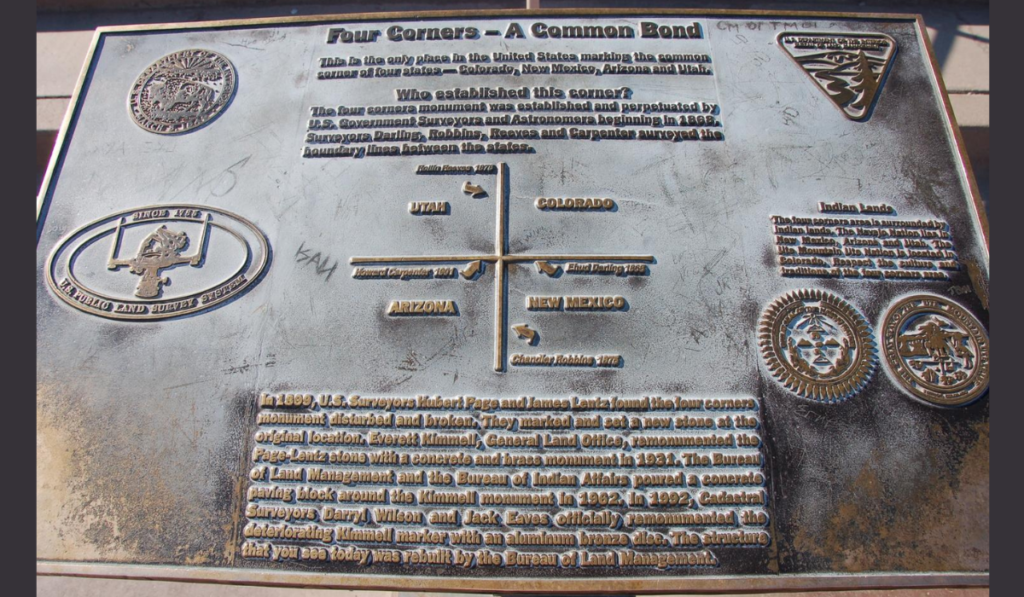
The history of the Four Corners Monument dates back to the late 19th century, when government surveyors established the boundaries between the four western territories. The original survey marker was placed in 1875 as part of efforts to accurately define state and territorial borders. Although early surveying methods were less advanced than today’s technology, later studies confirmed that the marker was remarkably close to the intended location.
Over the decades, the monument has been redesigned and improved to accommodate increasing numbers of visitors. The modern plaza features a large granite and concrete design with the official state seals surrounding the central bronze marker. Today, it serves not only as a geographic landmark but also as an important cultural site that reflects the heritage of the Navajo Nation and the neighboring Ute Mountain Ute Tribe. Millions of travelers have visited the monument over the years, making it one of the most recognizable roadside attractions in the American Southwest.
The monument gets its name because it marks the intersection of four U.S. states:
It remains the only location in the United States where four states share a common border.
Before planning your trip, it’s helpful to know the monument’s operating hours. The Four Corners Monument is generally open throughout the year, although hours may vary slightly depending on the season, weather conditions, or special events.
Most visitors prefer arriving early in the morning or later in the afternoon to avoid the strongest desert heat and larger crowds. Sunrise and sunset also provide excellent lighting for photography.
| Day | Timings |
| Monday | 8:00 AM – 5:00 PM* |
| Tuesday | 8:00 AM – 5:00 PM* |
| Wednesday | 8:00 AM – 5:00 PM* |
| Thursday | 8:00 AM – 5:00 PM* |
| Friday | 8:00 AM – 5:00 PM* |
| Saturday | 8:00 AM – 5:00 PM* |
| Sunday | 8:00 AM – 5:00 PM* |
Note: Operating hours may change seasonally or during holidays. Always verify current timings before your visit.
The ideal months to visit are:
These months usually offer pleasant temperatures, making it easier to explore the monument and nearby attractions comfortably. Summer afternoons can become extremely hot, while winter mornings may be cold due to the high desert elevation.
The Four Corners Monument is located in the remote desert region of the southwestern United States, exactly where the boundaries of Arizona, Colorado, New Mexico, and Utah intersect. The site lies within Navajo Nation land, surrounded by stunning desert scenery, mesas, and wide-open landscapes that are characteristic of the American Southwest.
Although the monument is situated in a relatively isolated area, it is a popular stop for travelers exploring destinations such as Monument Valley, Mesa Verde National Park, Canyon de Chelly, and other iconic attractions nearby. Most visitors reach the monument by private vehicle as public transportation options are very limited.
| City | Approximate Distance |
| Cortez, Colorado | 40 miles (64 km) |
| Bluff, Utah | 47 miles (76 km) |
| Shiprock, New Mexico | 57 miles (92 km) |
| Kayenta, Arizona | 76 miles (122 km) |
The Four Corners Monument is located in a remote part of the American Southwest, so traveling by private vehicle is the most convenient way to reach the attraction. Since there is no public transportation directly to the monument, many visitors include it as part of a road trip through Arizona, Utah, Colorado, or New Mexico.
The roads leading to the monument are generally well-maintained, and clear directional signs help visitors navigate to the site. Because services such as gas stations and restaurants can be limited in the surrounding desert region, it’s a good idea to fill up your fuel tank and carry drinking water before beginning your journey.
Driving is the easiest and most popular option. Visitors often combine the monument with nearby attractions such as Monument Valley or Mesa Verde National Park.
Approximate driving distances:
| Starting City | Distance | Driving Time |
| Cortez, Colorado | 40 miles (64 km) | 50 minutes |
| Bluff, Utah | 47 miles (76 km) | 1 hour |
| Shiprock, New Mexico | 57 miles (92 km) | 1 hour 15 minutes |
| Kayenta, Arizona | 76 miles (122 km) | 1 hour 30 minutes |
There is no commercial airport near the monument. Visitors usually fly into one of the following airports before renting a car:
A rental vehicle is recommended from any of these airports.
The monument offers parking for visitors arriving by car, RV, or motorcycle. Parking availability may become limited during holiday weekends and peak tourist seasons, so arriving early is recommended.
Although the monument itself is relatively compact, visitors can enjoy several memorable experiences during their visit. From taking iconic photographs to exploring Native American culture, there is something for travelers of all ages.
The biggest attraction is the famous bronze marker placed at the exact intersection of Arizona, Colorado, New Mexico, and Utah. Visitors can place one hand or foot in each state at the same time, making it one of the most photographed locations in the United States.
Photography is one of the highlights of any visit. Whether you’re traveling with family or friends, the central monument offers a unique backdrop that cannot be found anywhere else in the country.
Morning and late afternoon provide the best lighting conditions for photographs.
Around the monument, you’ll find local Navajo artisans selling handmade products, including:
Purchasing these handcrafted items directly supports local Native American families and artists.
Several vendors serve authentic regional dishes such as:
Trying traditional Navajo cuisine is an enjoyable part of the overall experience.
The monument offers visitors an opportunity to appreciate the traditions and heritage of the Navajo Nation. Many artisans are happy to explain the history behind their handcrafted artwork, making the visit both educational and memorable.
Despite its remote location, the Four Corners Monument provides several essential facilities to ensure visitors have a comfortable experience.
Available amenities include:
Most areas around the central monument are wheelchair accessible, making it easier for visitors with mobility challenges to enjoy the attraction.
Food stalls operated by local vendors serve traditional Native American dishes along with beverages and light snacks. Availability may vary depending on the season and visitor numbers.
To preserve the monument and ensure everyone has a pleasant visit, guests should follow the rules established by the Navajo Nation.
Being respectful helps protect this historic landmark and supports the local community that manages it.
The monument can be visited throughout the year, but weather conditions vary considerably due to its high-desert location.
Spring offers pleasant temperatures, blooming desert landscapes, and fewer crowds, making it one of the best seasons to visit.
Summer is the busiest travel season. While days are long and ideal for road trips, afternoon temperatures can be very hot. Carry sunscreen, a hat, and plenty of drinking water.
Many travelers consider autumn the perfect time to visit because of cooler weather and comfortable sightseeing conditions.
Winter brings colder temperatures, especially during mornings and evenings. Snowfall is uncommon but possible depending on weather conditions.
If you want memorable photographs during your visit, consider these tips:
The central bronze marker remains the most popular photography spot, but the surrounding desert scenery also creates stunning backgrounds.
A visit to the Four Corners Monument is often part of a larger road trip through the American Southwest. The surrounding region is home to breathtaking natural landscapes, historic sites, and Native American cultural attractions. If you have extra time, consider exploring these nearby destinations.
Located on the Arizona-Utah border, Monument Valley is one of the most recognizable landscapes in the United States. Its towering sandstone buttes have appeared in countless movies, television shows, and travel magazines. Visitors can enjoy scenic drives, guided Navajo tours, photography, and spectacular sunrise and sunset views.
Situated in Colorado, Mesa Verde National Park is famous for its remarkably preserved cliff dwellings built by the Ancestral Pueblo people. The park offers hiking trails, guided tours, museums, and panoramic viewpoints that showcase the region’s rich archaeological heritage.
This scenic park in Utah features dramatic bends of the San Juan River carved deep into the canyon over millions of years. It is a fantastic destination for photographers and nature lovers looking to experience stunning desert landscapes.
Located in northeastern Arizona, Canyon de Chelly combines spectacular red-rock scenery with centuries of Native American history. Visitors can explore scenic overlooks or join guided tours led by Navajo guides to learn about the area’s cultural significance.
Planning ahead can make your visit more comfortable, especially because the monument is located in a remote desert area. Keep these helpful tips in mind before you travel.
The desert climate can become very hot, particularly during summer. Staying hydrated is essential while exploring the monument.
Pack sunscreen, sunglasses, and a wide-brimmed hat to protect yourself from the strong desert sun.
Although the monument is easy to walk around, comfortable shoes are recommended, especially if you plan to explore nearby attractions.
Remember that cash is not accepted at the monument. Carry a valid credit or debit card for admission and purchases.
Morning hours usually offer cooler temperatures, better lighting for photography, and shorter queues at the central marker.
The monument is managed by the Navajo Nation. Visitors should respect local customs, support local artisans, and follow all posted guidelines.
Read Also: Imagica Water Park Ticket Price
Here are some fascinating facts about this famous landmark:
The admission fee is $10 per person, while children aged 6 years and younger enter free.
No. Tickets are currently purchased at the entrance when you arrive at the monument.
No. Only credit and debit cards are accepted for admission and purchases.
No. Since the monument is managed by the Navajo Nation, National Park passes are not accepted.
Most visitors spend 30 minutes to 1.5 hours exploring the monument, taking photos, shopping, and enjoying local food.
Yes. Parking is available for visitors arriving by car, motorcycle, or RV.
Spring (March to May) and autumn (September to October) are considered the best seasons due to pleasant weather and comfortable sightseeing conditions.
Yes. The monument is family-friendly, and children aged 6 years and under receive free admission.
The Four Corners Monument is one of the most unique travel destinations in the United States, offering visitors the rare opportunity to stand in four states at the same time. Along with its geographical significance, the monument provides an enriching cultural experience through the traditions of the Navajo Nation, local artisan markets, and authentic Native American cuisine. Knowing the Four Corners Monument tickets price, operating hours, payment policies, and visitor guidelines before your trip will help you enjoy a smooth and memorable experience.
Whether you’re planning a cross-country road trip, exploring the stunning landscapes of the American Southwest, or simply checking another iconic landmark off your travel bucket list, the Four Corners Monument is well worth a visit. Its unique location, fascinating history, and welcoming atmosphere make it a destination that appeals to travelers of all ages.